
AICAR
Also known as: 5-Aminoimidazole-4-carboxamide ribonucleotide
An AMPK activator that turns on the molecular pathway exercise normally activates. Famous as the "exercise in a syringe" rodent paper and infamous as a WADA-banned substance.
Overview
AICAR is honestly more of a research tool than a peptide protocol. The 2008 Salk paper showed sedentary mice given AICAR ran further than untrained controls, and the press cycle that followed was unkind to the truth: rodents and humans are not the same animal here. AMPK does respond to AICAR in humans, but the systemic effect is far smaller than the rodent data implies, and clinical trials are essentially nonexistent. What you actually have is a handful of athletes who took it pre-workout, a WADA ban that exists for a reason, and a mechanism that is well-characterised in cell culture. Treat the user reports as anecdotal at best.
Evidence quality
The famous Narkar et al. 2008 paper in Cell is the source of the "exercise mimetic" framing — it showed sedentary mice running 44% further on AICAR. Follow-up rodent work is broadly supportive. Human data is limited to small pharmacokinetic and metabolic studies, with no controlled trials of endurance or body composition. Real-world human use is essentially anecdotal.
Benefits & timeline
Benefits
- Activates AMPK, the same energy-sensor pathway that responds to exercise and metformin
- Pre-workout dosing increases perceived training capacity in some users (subjective, uncontrolled)
- Rodent studies show improved fat oxidation and endurance at doses well above what humans use
- Theoretically useful in metabolic protocols, though no human trial confirms this
Timeline
Week 1
Pre-workout dose may produce a subtle endurance bump. Easy to confuse with placebo.
Week 2–3
Users who feel an effect describe it as a slight extra gear during steady-state cardio, not raw strength.
Week 4–6
Most subjective gains plateau here. If you have not noticed anything by week 4, you are unlikely to.
Off-cycle
4 weeks off. Use the gap to see whether endurance metrics drop back to baseline.
Dosage protocols

Advanced
1000 mcg
once daily
WADA-prohibited substance for athletes.
Beginner
250 mcg
once daily
Standard
500 mcg
once daily
Titration & adjustment
Start at 250 mcg once daily. After 1 week escalate to 500 mcg daily. Maximum 1 mg daily. Effect is most noticeable when dosed 30–60 minutes pre-workout. Cycle off for 4 weeks every 8 weeks. Note: WADA-banned for competitive athletes.
Injection timing

Once daily, 30–60 minutes pre-workout for maximum exercise-mimetic effect. On rest days, dose in the morning.
Side effects & contraindications

- mildInjection-site soreness, the usual.
- mildTransient nausea or light-headedness in the first session.
- moderateTheoretical risk of hypoglycaemia in fasted states, because AMPK activation accelerates glucose uptake. Eat something before training.
- moderateNo long-term human safety data. Animal carcinogenicity work has not produced an obvious signal but is also not reassuring at high chronic doses.
Contraindications
- Competitive athletes subject to WADA testing — banned substance, multi-year suspensions follow detection
- Active or recent cancer — AMPK activation has context-dependent effects on tumour cells and the picture is not clean
- Pregnancy and breastfeeding
- Type 1 diabetes or anyone on insulin without careful glucose monitoring
Reconstitution & injection
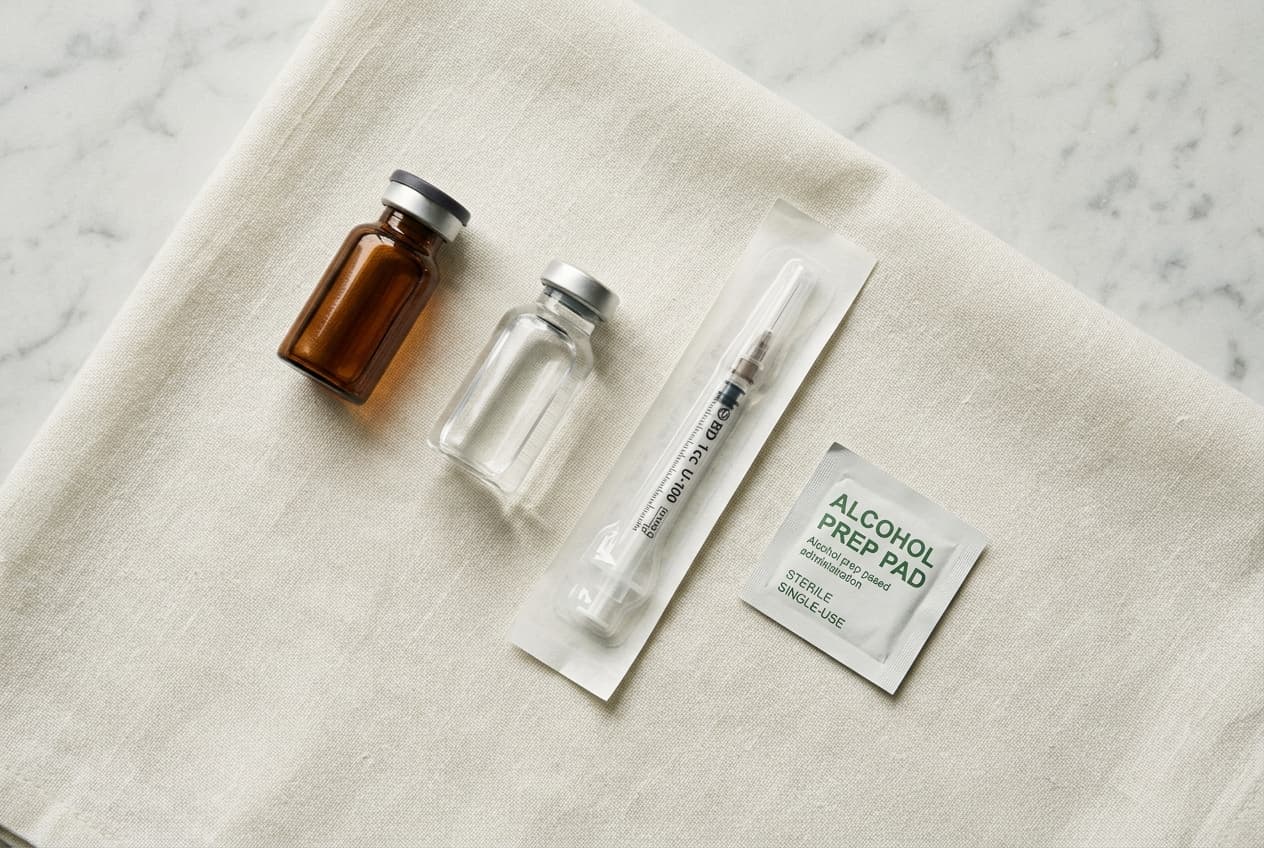
A 10 mg vial mixed with 2 ml bacteriostatic water gives 5 mg per ml. The standard 500 mcg dose is 0.1 ml, which is 10 units on a U-100 insulin syringe. Subcutaneous, abdomen or thigh, 30–60 minutes before training. Vial keeps in the fridge for about four weeks after reconstitution.
Open calculator pre-filledStorage after reconstitution
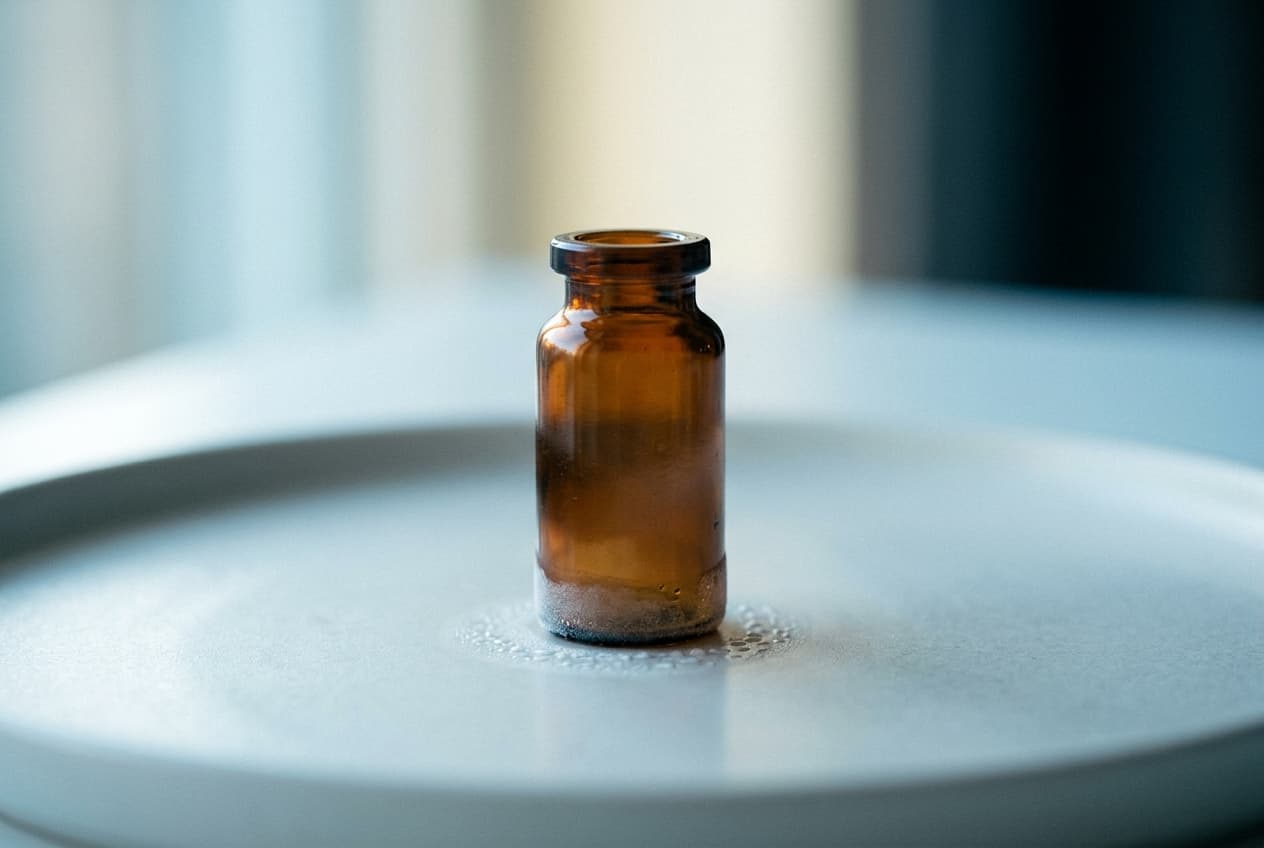
Refrigerate at 2–8 °C after reconstitution. Do not freeze. Light-protected. 28 days of stability in BAC water at fridge temperature. AICAR is mildly photosensitive — keep the vial in a small opaque bag in the fridge rather than relying on the fridge interior being dark.
Common mistakes
Expecting the rodent endurance numbers to translate to humans.
Better approach: The Salk mice were given doses that, scaled to body mass, would be enormous in a human. The mechanism activates in humans, but the magnitude does not. If you are dosing AICAR expecting a 40% endurance jump, you will be disappointed.
Stacking with metformin and a fasted training block.
Better approach: Both activate AMPK and both can drop glucose. Stacking them while fasted is how you bonk a long session or end up dizzy mid-run. Pick one, and eat carbs before the workout.
Continuing for months without a break.
Better approach: There is no human evidence that chronic dosing keeps working, and AMPK is a tightly regulated pathway your body adapts around. Cycle 4–6 weeks on, 4 weeks off, and use the off-period to recheck baseline.
Competing in a tested sport while running this.
Better approach: WADA tests for AICAR. The metabolite signature is distinctive and the bans are long. If you are tested, this is not the molecule for you.
Real-world tips
- Dose 30–60 minutes pre-workout — the half-life is short and pre-loading captures most of the window.
- Eat 20–30 g of carbs before training when running AICAR. The glucose-uptake bump is the most reliable physiological effect and it can leave you flat if you train fasted.
- Track one objective endurance measure (heart rate at fixed pace, time to exhaustion on a steady-state bike test). Subjective "I felt good today" drifts with sleep and caffeine.
- Refrigerate reconstituted vials. Discard at four weeks.
- If you compete in any tested sport — masters athletics, USPA, IPF, NCAA, anything sanctioned — do not run AICAR. The ban list is the ban list.
When something else is the better tool
Metformin
Use instead when: You want AMPK activation that has been used in millions of people for decades and has actual human outcome data. Metformin is cheaper, safer, oral, and not banned. The trade-off is that the magnitude of AMPK activation is gentler and it can blunt training adaptations if dosed around workouts.
MOTS-c
Use instead when: You want mitochondrial-level energy support with a slightly better-developed evidence base. MOTS-c sits in roughly the same conceptual space but has more recent human pilot work behind it.
Actually training more
Use instead when: Always, but especially here. The exercise-mimetic framing is misleading: nothing mimics the full adaptation pattern of real training. If your goal is endurance, polarised cardio for 8 weeks will outperform AICAR.
- Is this actually a peptide?
- No, AICAR is a nucleoside analog — a small molecule. It gets grouped with the peptide community because of injectable use and the longevity/performance overlap, but chemically it is a different class.
- Will it show up on a drug test?
- Yes, in any WADA-coded test. AICAR and its metabolites have specific assays. Half-life is short but the detection window is longer than the active window.
- Can I just take it orally?
- Oral bioavailability is poor and inconsistent. Most users who report effects are injecting. There is no reason to expect a sublingual or capsule form to match.
- Does it work for fat loss?
- The rodent fat-oxidation data is real but, again, at doses that do not scale cleanly to humans. If your goal is body composition, GLP-1s or a structured deficit will dwarf whatever AICAR adds.