CJC-1295 with DAC
Also known as: CJC-1295 with DAC · Drug Affinity Complex CJC-1295
The long-acting version: the same GHRH analogue plus a Drug Affinity Complex that lets it bind albumin reversibly, stretching the half-life from minutes to days. Convenience peptide — one shot a week — at the cost of the pulsatile pattern.
Overview
DAC turns CJC-1295 from a pulse peptide into a continuous-elevation peptide. The albumin-binding extends the half-life to roughly 6–8 days, which means a single weekly injection keeps GH and IGF-1 mildly elevated all the way through. That sounds like an upgrade, and it is from a compliance standpoint, but the structural cost is real: continuous GHRH stimulation desensitises the pituitary GHRH receptor faster than discrete pulses do. The honest framing is that DAC is a trade — you trade pulse fidelity for once-weekly dosing, and you have to cycle off more often as a result.
Evidence quality
The half-life extension and the sustained IGF-1 elevation are pharmacologically well-characterised — Teichman and colleagues (2006) is again the original pharmacokinetic paper. Long-term body-composition or safety data in healthy adults is sparse. The receptor-desensitisation concern is mechanistic rather than from a head-to-head trial against no-DAC, but the basic-science case is strong enough that the cycling pattern (8 on, 4 off) is the conventional answer.
Benefits & timeline
Benefits
- Once-weekly subcutaneous dose — the compliance advantage is real
- Sustained mild elevation in GH and IGF-1 across the whole week
- Recovery and skin quality improvements over months
- Easier to combine with travel or shift work than 2x daily protocols
Timeline
Week 1
IGF-1 begins to climb. Sleep changes are subtler than with no-DAC because the pattern is steady rather than pulsed.
Week 2–4
Recovery shortens. Some users feel mild water retention here.
Week 6–8
Body composition shift becomes visible. Skin tone improves.
Week 8
Receptor desensitisation begins to creep in. The 8-week ceiling is shorter than no-DAC for this reason.
Off-cycle
Four weeks off lets the GHRH receptor refresh. The next cycle responds normally; running back-to-back cycles without the break is where users feel the peptide 'stopped working'.
Dosage protocols
Advanced
2 mg
twice weekly
Continuous "GH bleed" rather than discrete pulses.
Beginner
1 mg
once weekly
Standard
2 mg
once weekly
Titration & adjustment
Start at 1 mg once weekly. The long half-life means you only need to titrate if water retention or joint discomfort appears — in which case skip the next weekly dose and resume at 0.5 mg. Maximum 2 mg weekly. Because the elevation is continuous (not pulsatile), receptor desensitisation can creep in — cycle off for 4 weeks every 8 weeks.
Injection timing
Once weekly — time of day does not matter because the half-life is days. Pick a fixed weekday and stick to it.
Side effects & contraindications

- moderateFaster receptor desensitisation than no-DAC — continuous elevation downregulates the receptor more than discrete pulses do.
- mildWater retention in the first 2–3 weeks.
- mildJoint aches at higher doses, especially in the hands. Pulling back 0.5 mg usually resolves it.
- moderateLoss of natural GH pulsatility. The body's overnight pulse is muted by the chronic elevation; cycling off is what restores it.
Contraindications
- Active cancer or recent cancer history — sustained IGF-1 elevation is the structural concern with DAC specifically
- Pregnancy or breastfeeding
- Severe insulin resistance — the continuous elevation is harder on glucose tolerance than pulsed dosing
- Patients prioritising preservation of pulsatile GH — DAC is the wrong tool
Reconstitution & injection
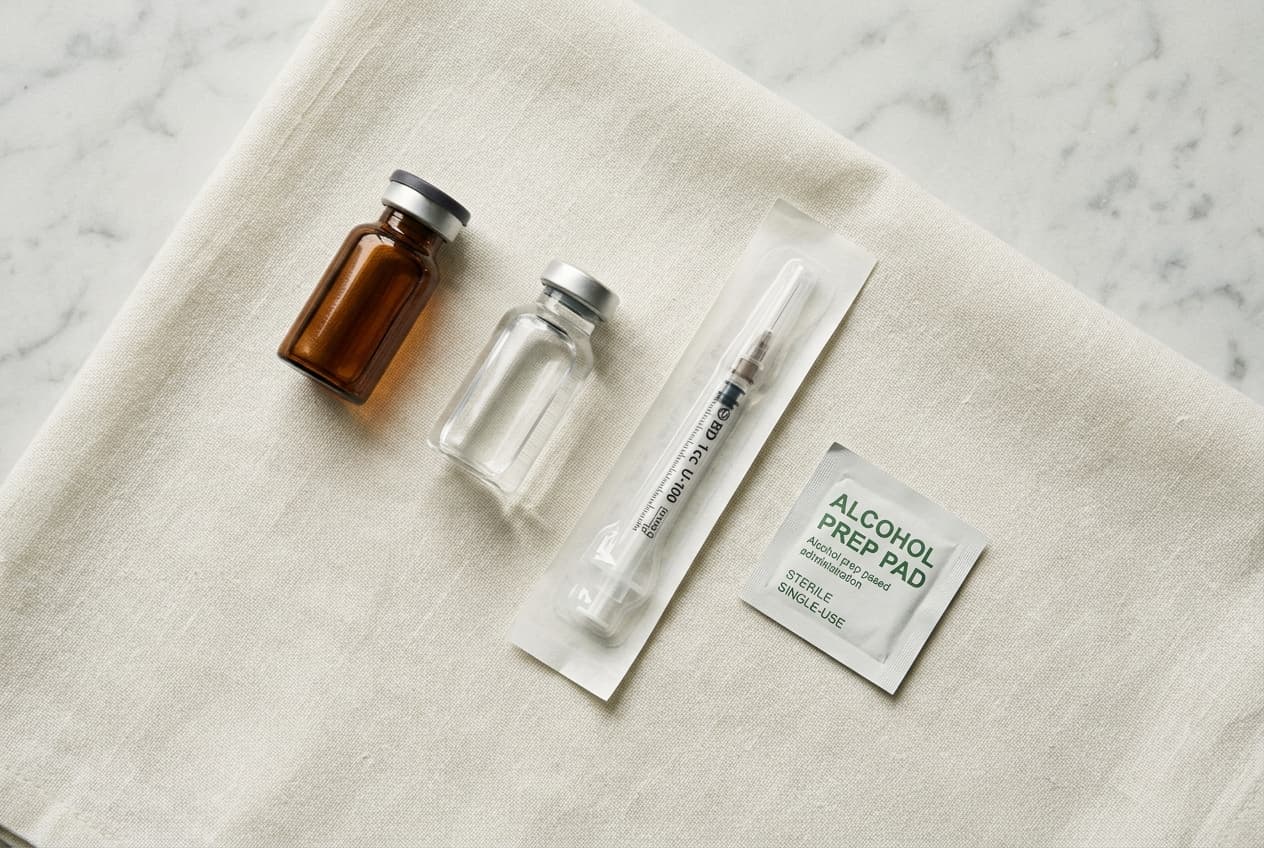
A 2 mg vial reconstituted with 2 ml bacteriostatic water gives 1 mg/ml. A 1 mg dose is 1 ml — 100 units on a U-100 insulin syringe (so use a standard 1 ml syringe rather than an insulin pen for this one). Subcutaneous abdomen, once weekly on a fixed weekday. Time of day does not matter because the half-life is days. Refrigerate after mixing.
Open calculator pre-filledStorage after reconstitution
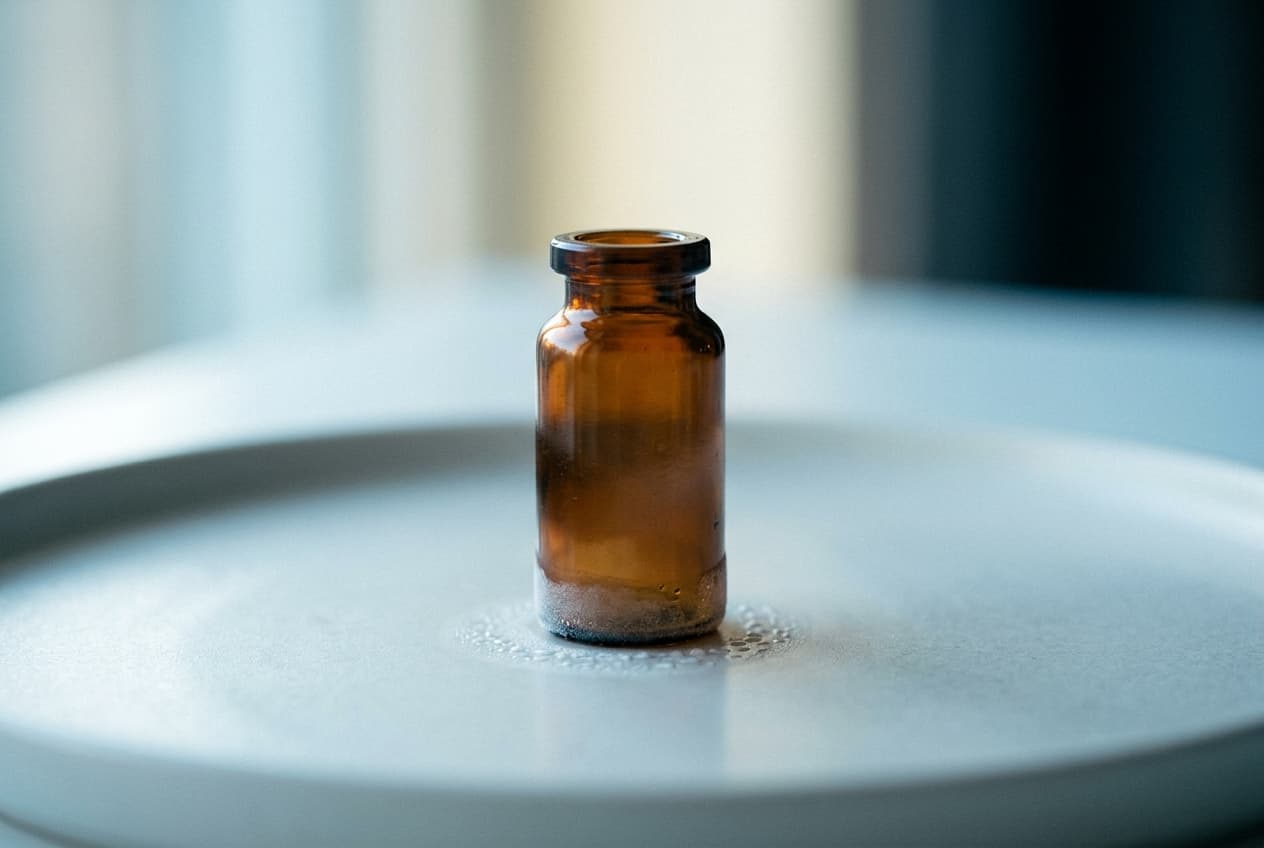
Refrigerate at 2–8 °C after reconstitution. Do not freeze. Light-protect. The DAC modification (drug affinity complex with albumin) gives the molecule excellent in-vivo half-life but does not extend in-vial stability — still treat as a 28-day fridge window in BAC water. Because the weekly dose is small (1–2 mg), you can reconstitute with a smaller BAC volume (e.g. 1 ml for a 2 mg vial = 2 mg/ml) and finish the vial well inside the stability window.
Common mistakes
Running DAC continuously because once-weekly feels harmless.
Better approach: Continuous elevation is exactly what desensitises the GHRH receptor. The 8-week-on, 4-week-off rhythm is short compared to no-DAC for a reason. Skipping the off-period is the single most common cause of users feeling the peptide quit on them.
Stacking DAC with Ipamorelin on a daily schedule.
Better approach: The synergy with Ipamorelin is a pulse-on-pulse effect — it depends on both peptides peaking together. DAC does not peak, it plateaus. If you want the GHRP synergy, use no-DAC CJC. If you want once-weekly convenience, run DAC alone.
Doubling the dose to 'catch up' after a missed week.
Better approach: The half-life means a missed week is genuinely a missed week — you can shift the schedule, but doubling produces fluid retention and joint aches without proportional benefit. Resume the normal dose on the new schedule day.
Picking DAC because it is cheaper per week.
Better approach: Cheap-per-week is not the right axis if the receptor desensitises and you have to take 4 weeks off every 8. The total annual cost and total useful weeks of dosing matter more. Pick DAC for the dosing convenience, not the per-vial economics.
Real-world tips
- Pick a fixed weekday and stick to it. The half-life forgives an hour of slippage, not a day.
- Use a 1 ml syringe, not an insulin pen — the dose volume is too large for insulin-pen markings to be precise.
- Watch the rings on your fingers for the first three weeks. The fluid retention shows up there before it shows up on the scale.
- Track HbA1c every 12 weeks if you are running it long-term. Continuous IGF-1 elevation is metabolically heavier than pulsed dosing.
- Refrigerate the reconstituted vial. Stability is fine across the dosing month at fridge temperature.
When something else is the better tool
CJC-1295 (no DAC)
Use instead when: Pulse fidelity matters more than dosing convenience. No-DAC produces discrete GH pulses that match the body's natural pattern, and the receptor stays sensitive across longer cycles. The trade-off is multiple shots per day instead of one per week.
Sermorelin
Use instead when: You want the gentlest possible GHRH signal in line with the natural sleep-onset pulse. Sermorelin pulses; DAC plateaus. For users where 'minimum effective pharmacology' is the goal, Sermorelin wins on principle.
Tesamorelin
Use instead when: Visceral fat is the explicit target. Tesamorelin's trial base on abdominal-fat reduction is much stronger than DAC's general body-composition data.
- DAC or no-DAC?
- DAC for convenience and a steady IGF-1 floor; no-DAC for pulse fidelity and longer cycles without desensitisation. If you cannot reliably do daily injections, DAC is the realistic answer. If you can, no-DAC is the better tool.
- How long can I run a DAC cycle?
- 8 weeks on, 4 weeks off is the conventional rhythm. The receptor desensitisation creeps in faster under continuous stimulation than under pulses, which is why the on-cycle is shorter than no-DAC's 12 weeks.
- Can I stack it with Ipamorelin?
- You can, but the synergy is muted because DAC does not pulse — the pulse-on-pulse amplification that makes the no-DAC + Ipamorelin stack work is absent. For a GHRH + GHRP stack, no-DAC is the right CJC version.
- Best day of the week to dose?
- Whichever day you can repeat reliably. Many users pick Sunday or Monday because the routine resets with the calendar week. Time of day does not matter — the half-life is days.
- Will the once-weekly dose feel like much?
- It builds. Week 1 is subtle; the recovery and body-composition changes land around weeks 4–8. The peptide is not designed for a noticeable single-dose effect — the value is in the sustained IGF-1 floor across the week.