
IGF-1 LR3
Also known as: IGF-1 LR3 · Long R3 IGF-1
The growth signal one step downstream of GH, with an extended half-life and a real hypoglycaemia risk. The most directly anabolic peptide a non-medical user can buy, and the one with the most teeth.
Overview
IGF-1 LR3 is a synthetic analogue of insulin-like growth factor 1, modified with an N-terminal extension and a single substitution (Arg3) that prevents binding to circulating IGF-binding proteins. The result is a molecule that stays free in plasma for 20–30 hours instead of minutes, doing the work that the rest of the GH axis exists to produce — direct anabolic signalling at the muscle level. Everything upstream (HGH, secretagogues, GHRH analogues) is trying to raise endogenous IGF-1. LR3 skips the queue. That directness is the point and the problem: receptor desensitisation arrives fast (4 weeks is the hard ceiling), hypoglycaemia is a real acute risk because IGF-1 and insulin share enough receptor cross-talk to drive glucose down, and the long-term cancer-promotion concern is mechanistically obvious rather than hypothetical. It is the most advanced tool in this part of the catalogue.
Evidence quality
Pharmacology in healthy adults and in pediatric short-stature trials established that IGF-1 LR3 elevates free IGF-1 levels meaningfully and produces measurable anabolic effects. Long-term safety and efficacy data in healthy adults seeking hypertrophy do not exist. The cancer-promotion concern is grounded in IGF-1's role in tumour biology — it is mechanistic, not just precautionary.
Benefits & timeline
Benefits
- Direct anabolic stimulus on muscle — strength and pump effects within the first week
- Faster glycogen replenishment between training sessions
- Satellite-cell activation contributing to genuine hypertrophy, not just water-driven fullness
- Useful as a finishing tool at the end of a longer GH-axis cycle when endogenous IGF-1 elevation has plateaued
Timeline
Week 1
Pumps feel fuller. Hypoglycaemia symptoms — shakiness, lightheadedness — possible if carbs are mistimed.
Week 2
Measurable strength gains on compound lifts. Recovery between sessions tightens.
Week 3
Hypertrophy starts to be visible. Vascularity improves. Receptor sensitivity already starting to drop.
Week 4
Cycle off. Four weeks is the ceiling — pushing further produces diminishing return and rising side-effect risk.
Off-cycle
4 weeks minimum off lets receptors re-sensitise. Gains hold if training and nutrition do; they fade if either lapses.
Dosage protocols

Advanced
100 mcg
once daily post-workout
High potency; hypoglycaemia risk.
Beginner
20 mcg
once daily post-workout
Standard
50 mcg
once daily post-workout
Titration & adjustment
Start at 20 mcg/day for the first 3 days to establish hypoglycaemia tolerance. Eat 20–30 g carbs in the hour after injection. Escalate by 10 mcg every 3 days to your target dose. Maximum 100 mcg/day. Never cycle longer than 4 weeks — receptor desensitisation is rapid. Off-cycle at least 4 weeks before repeating.
Injection timing

Immediately post-workout (within 15 minutes). Eat 20–30 g of fast carbs within an hour to buffer the hypoglycaemia risk. On rest days, dose in the morning with breakfast and skip the workout-window protocol.
Side effects & contraindications

- moderateHypoglycaemia within 30–60 minutes of injection if carbs are not eaten. Shakiness, sweating, mental fog — eat fast carbs and recover within minutes.
- moderateLocalised tissue growth at the injection site — visible asymmetry if you inject the same muscle repeatedly.
- moderateJoint discomfort and water retention, especially toward the end of a 4-week cycle.
- severeTheoretical acceleration of latent cancers. IGF-1 is the most direct mitogenic signal in the body; users with any cancer history must not run this.
- moderateInsulin resistance over repeated cycles. Track fasting glucose and HbA1c between cycles.
Contraindications
- Any active or past cancer — IGF-1 is the mitogenic signal you do not want amplified
- Type 1 or insulin-treated type 2 diabetes — the hypoglycaemia risk compounds dangerously
- Pregnancy or breastfeeding
- Untrained users — IGF-1 LR3 without a serious training stimulus is mostly water retention and risk
- Anyone unable to keep fast-acting carbs within arm's reach during the hour after injection
Reconstitution & injection
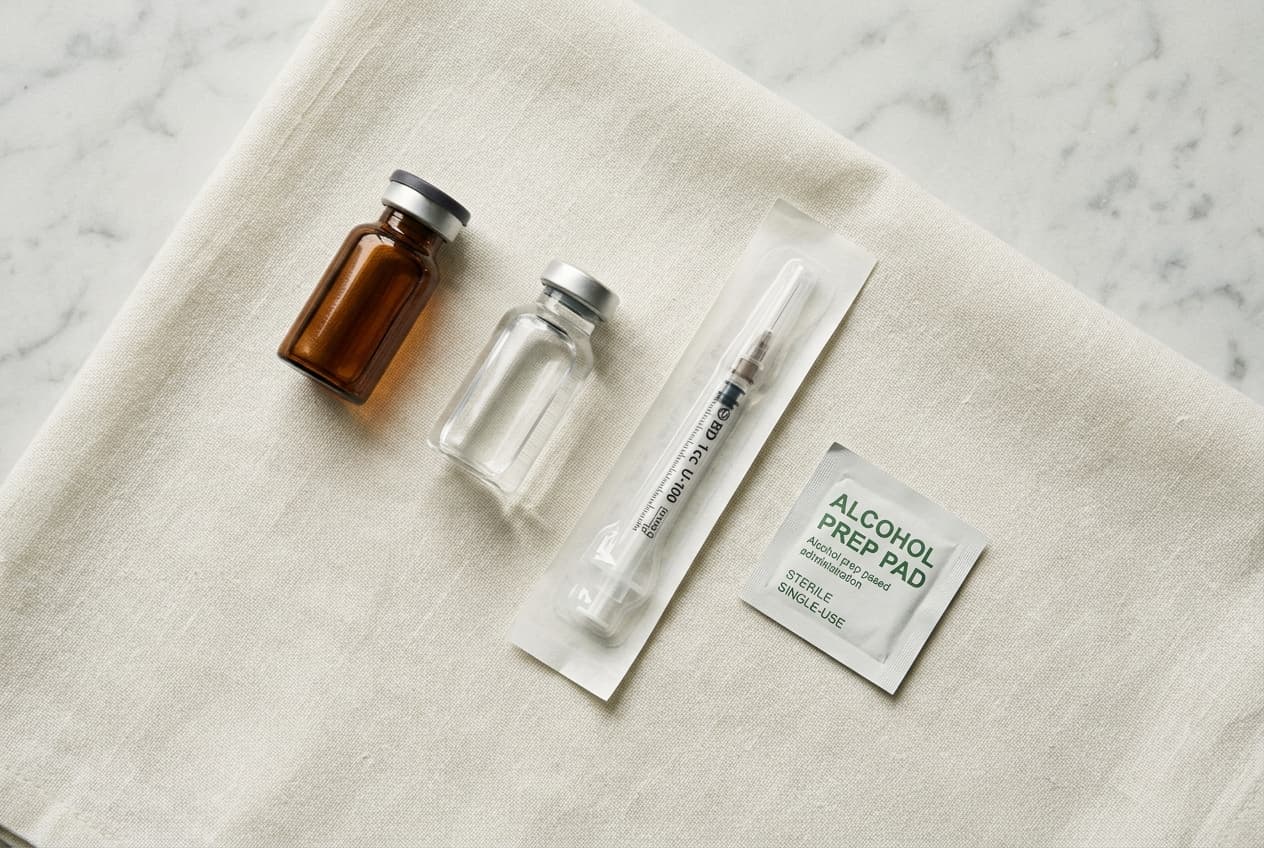
A 1 mg vial reconstituted with 1 ml of bacteriostatic water gives 1000 mcg/ml. A 50 mcg dose is 0.05 ml — 5 units on a U-100 insulin syringe. Subcutaneous into the trained muscle area, immediately post-workout, with 20–30 g of fast carbs in hand. Refrigerate after mixing; potency holds for about 4 weeks under stable cold conditions. Some users prefer split injections (half into each side of the trained muscle group) to avoid the unilateral-growth asymmetry that can develop with repeated same-site dosing.
Open calculator pre-filledStorage after reconstitution
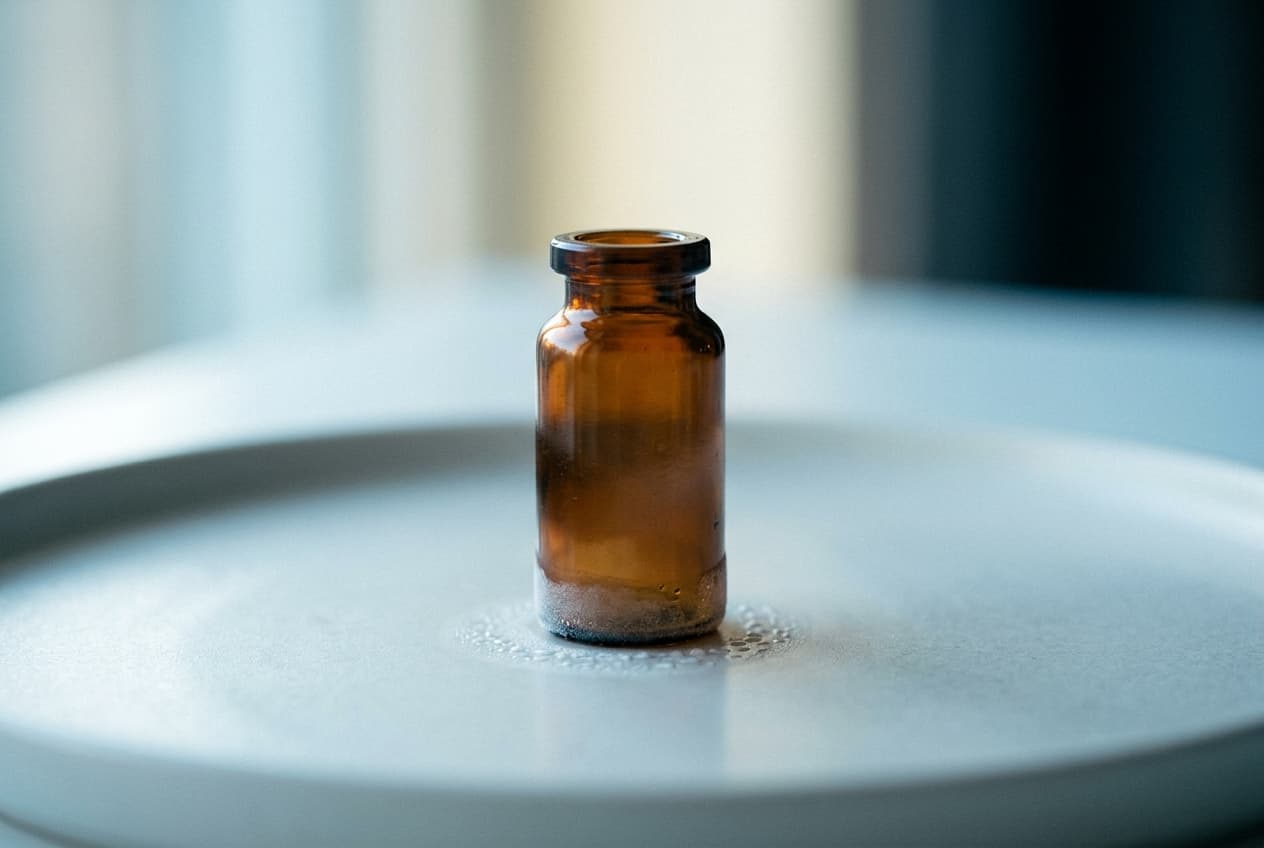
Refrigerate at 2–8 °C after reconstitution. Do not freeze. Light-protected. IGF-1 LR3 reconstituted in BAC water is stable for 30 days at fridge temperature. Reconstituting in 0.6% acetic acid (instead of BAC) extends stability to ~3 months but most users use BAC water for skin tolerance — the trade-off is the shorter window. Do not vortex; gentle swirl only, as IGF-1 is shear-sensitive.
Common mistakes
Skipping the post-injection carbs because you are mid-cut.
Better approach: The hypoglycaemia risk is not optional. 20–30 g of fast carbs within an hour of injection is the safety floor — without it, mental fog and shakiness escalate quickly and a couple of users every cycle end up white-knuckling through a glucose crash. If you cannot honour the carbs, do not run IGF-1 LR3 in a cut. Switch to MGF or PEG-MGF for the local anabolic signal without the systemic insulin-axis crosstalk.
Running it longer than 4 weeks.
Better approach: Receptor desensitisation arrives fast. By week 5 you are paying for vials that produce diminishing return while compounding side-effect risk. The 4-on/4-off rhythm is the protocol the experienced community has converged on, and the pharmacology supports it.
Injecting the same muscle every workout for 4 weeks.
Better approach: Localised growth at the injection site is real — measurable asymmetry can develop in calves, forearms, or biceps with repeated same-site dosing. Rotate across muscle groups across the week, or split each dose between left and right sides if you want the local effect without the asymmetry.
Stacking IGF-1 LR3 with insulin during the same workout window.
Better approach: The hypoglycaemic effects compound nonlinearly. Combining the two is how grey-market users end up in emergency rooms. If you are running insulin and an IGF, separate them by hours, eat properly between, and consider whether the stack is worth the risk profile at all.
Real-world tips
- Carbs first. Inject second. The order matters when you are tired after a workout and your judgement is off.
- Glucometer in the gym bag during the first week. Test if you feel off — most users learn their personal warning signs quickly.
- Inject into different muscle groups across the week (chest day, back day, leg day) to spread the local-growth effect.
- Stop at week 4. Set a calendar reminder. The temptation to push another week is the most common cycle mistake.
- Pair with serious training. The peptide amplifies the training stimulus — without the stimulus, it is mostly water and risk.
- Use the off-cycle to re-test fasting glucose. Returning to baseline within a few weeks is the normal pattern; persistent elevation is the signal to stop using LR3.
When something else is the better tool
HGH (somatropin)
Use instead when: You want IGF-1 elevation as part of a broader GH-axis effect (recovery, sleep, fat loss) over a longer cycle. HGH is the slower, broader, less acutely anabolic tool with a tamer hypoglycaemia profile and a longer safety record.
MGF / PEG-MGF
Use instead when: You want the local anabolic signal without systemic IGF-1 elevation and without the hypoglycaemia risk. MGF gives you satellite-cell activation in the trained muscle; PEG-MGF gives you the systemic version of that signal at a much lower hypoglycaemia footprint than LR3.
Just train harder and eat more
Use instead when: If you have not yet maximised the basics — progressive overload, calorie surplus, sleep, recovery — IGF-1 LR3 is not the missing ingredient. The peptide is a finishing tool for advanced users, not a shortcut for intermediate ones.
- How is IGF-1 LR3 different from HGH?
- HGH raises endogenous IGF-1 via the liver, indirectly and across the whole body. LR3 is exogenous IGF-1 with an extended half-life, doing the work directly at the receptor. Faster, sharper, with more acute hypoglycaemia and faster receptor desensitisation.
- Do I have to eat carbs every time?
- Yes. Within an hour of injection, 20–30 g of fast-acting carbs — fruit, white rice, a sports drink — is the floor. Skipping this is the number-one preventable side effect.
- How much can I gain in a 4-week cycle?
- Realistically 2–4 kg of lean tissue if training and calories support it, plus some water that drops off-cycle. Anyone promising more is selling something — the receptor desensitises before the gains compound.
- Is the cancer risk real?
- Mechanistically yes — IGF-1 is a known mitogenic signal in most epithelial tumours. There is no controlled clinical evidence quantifying the risk in healthy users running short cycles. Anyone with a personal or family history of cancer should pick a different tool from the catalogue.
- Can I run a longer cycle at a lower dose?
- Receptor desensitisation is dose-and-time integrated. Lower-dose longer-cycle protocols still hit the desensitisation wall, just slightly later. The 4-week ceiling holds.