
Melanotan-1
Also known as: MT-1 · Afamelanotide
An α-MSH analogue approved in the EU and US as Scenesse (afamelanotide) for erythropoietic protoporphyria. The off-label tanning use is what most people actually want it for.
Overview
Melanotan-1 — branded as Scenesse and known generically as afamelanotide — is a synthetic α-melanocyte stimulating hormone analogue that binds the MC1R receptor on skin melanocytes and drives eumelanin (the brown protective pigment) production. It is genuinely approved: the EMA cleared it in 2014 and the FDA in 2019 for erythropoietic protoporphyria, a rare genetic condition that makes sunlight intolerably painful. The approved form is a slow-release subcutaneous implant. The grey-market injectable form is what people use for cosmetic tanning, which is off-label and isn't what Clinuvel's safety data covers. MT-1 is highly selective for MC1R, so it lacks most of MT-2's libido and gastrointestinal side effects.
Evidence quality
EMA approval 2014, FDA approval 2019 for erythropoietic protoporphyria as Scenesse. Phase 3 trials (CUV029, CUV030, CUV039) showed extended pain-free sunlight tolerance in EPP patients. The off-label cosmetic use is not what was approved and is not what was studied long-term.
Benefits & timeline
Benefits
- Reliable, durable skin pigmentation increase that develops over two to four weeks of loading
- Approved photoprotection for EPP — the clinical indication is real and the regulatory story is well-documented
- Cleaner side-effect profile than MT-2 because MC1R selectivity avoids the MC3/MC4 cross-activation
- Reduces UV-induced erythema in EPP patients enough to allow sunlight tolerance
Timeline
Week 1
Subtle pigment shift; mild nausea on first few doses.
Week 2
Visible darkening, especially on sun-exposed skin. Existing moles also darken.
Week 4
Loading phase usually ends here. Pigmentation plateaus.
Week 6 onward
Maintenance with once-weekly dosing holds the colour.
After stopping
Pigment fades over 6–12 weeks as melanin-laden cells slough off.
Dosage protocols
Advanced
1 mg
every other day
Pigmentation reaches plateau, then maintenance once weekly.
Beginner
250 mcg
daily for 7 days
Standard
500 mcg
daily for 10 days
Titration & adjustment
Loading: 250 mcg subcutaneously daily for 7 days. If pigment response is good, drop to maintenance of 500 mcg twice weekly. If you want darker pigmentation, extend loading to 10 days at 500 mcg before dropping to maintenance.
Injection timing

Daily during loading — time of day does not matter for pigmentation, but mid-morning dosing reduces the chance of evening nausea. Maintenance phase: same fixed weekday each week.
Side effects & contraindications

- mildNausea in the first few doses, especially without food.
- mildDarkening and increase in size or number of moles — this is the one to take seriously over time.
- mildFacial flushing for the first hour after injection.
- moderateLong-term melanoma risk has not been characterised. Pigmentation is partial UV protection, not a substitute for sunscreen, and grey-market dosing isn't covered by the Clinuvel post-marketing surveillance.
Contraindications
- Personal or strong family history of melanoma — the mole-darkening side effect is exactly the dermatological observation that could mask early melanoma
- Many atypical naevi or fair Fitzpatrick I skin with multiple sun-damaged spots — the dermatology screening burden is too high
- Pregnancy — no human safety data
- Current immunosuppression for any reason — pigmentation is one thing your dermatologist wants to be able to read clearly
Reconstitution & injection
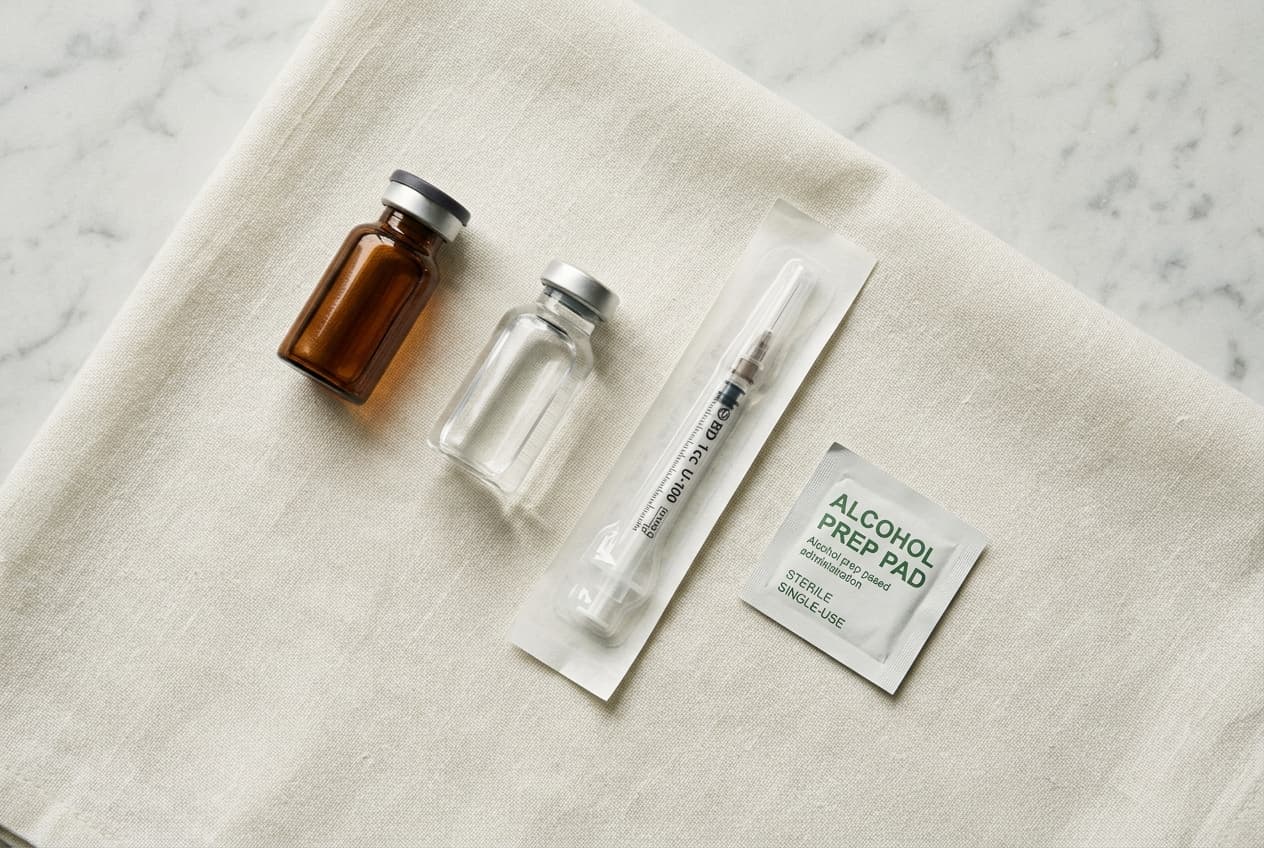
A 10 mg vial reconstituted with 2 ml bacteriostatic water gives 5 mg/ml. A 500 mcg dose is 0.1 ml, which is 10 units on a U-100 insulin syringe. Subcutaneous in the abdomen or thigh. Loading is daily for the first one to two weeks; maintenance is once or twice weekly thereafter. Mid-morning dosing reduces the chance of evening nausea catching you at dinner.
Open calculator pre-filledStorage after reconstitution
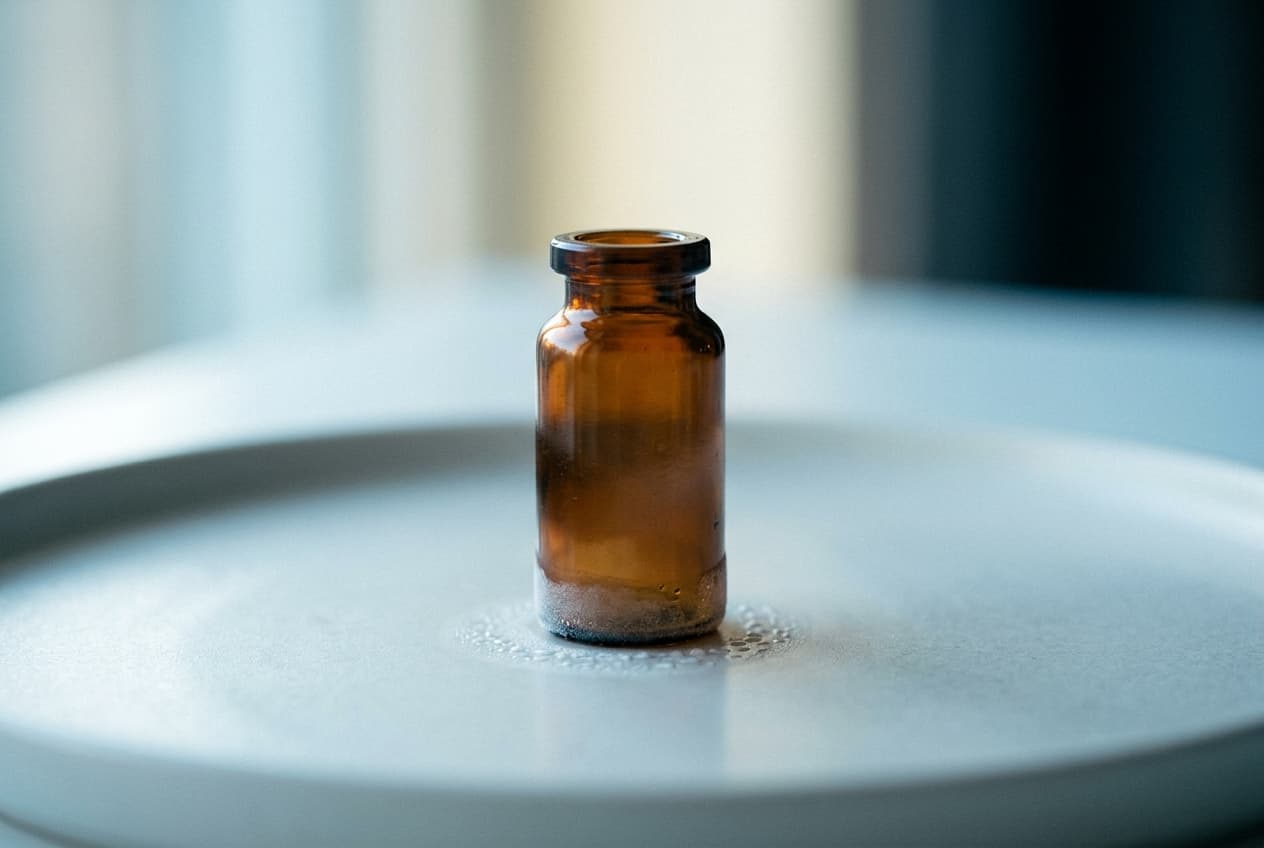
Refrigerate at 2–8 °C after reconstitution. Do not freeze. Light-protected (MT-1 is moderately photosensitive — keep the vial wrapped or in an opaque container in the fridge). 30 days of stability at fridge temperature in BAC water. Solution may take on a faint yellow tint over time, which is acceptable; brown or amber means discard.
Common mistakes
Skipping a baseline dermatology check.
Better approach: Get a full skin survey before you start. A photographic record of every mole gives you a reference point, so that when moles change during use you know whether it's the peptide effect or something a dermatologist needs to biopsy.
Treating it as a sunscreen replacement.
Better approach: MT-1 increases pigment, which provides a modest SPF-like effect — roughly equivalent to SPF 3–10 depending on baseline skin. That's not protection. Sunscreen is still mandatory; the peptide just makes sunburn slightly less likely if you forget.
Pushing through the nausea by doubling the dose.
Better approach: Nausea is dose-related. Drop the dose by half until your body adjusts, then ramp. The pigmentation effect is achievable at the lower dose, just slower.
Confusing it with MT-2.
Better approach: MT-1 is selective for MC1R. MT-2 isn't. The libido side effect and the priapism risk belong to MT-2. If someone is selling you 'Melanotan' without specifying which one, the answer matters and you should know which you have.
Real-world tips
- Photograph all visible moles before starting and every month thereafter. The dermatologist will thank you.
- Mid-morning injection. Evening nausea while trying to fall asleep is the most common 'I quit' reason.
- Refrigerate after reconstitution; potency drops noticeably after about 3–4 weeks even cold.
- Avoid the loading window during a tanning holiday. The pigment lags the injections by 1–2 weeks; you want the colour in before the trip, not during it.
- Existing tattoos can darken slightly. Usually not enough to look strange, but worth knowing before the first dose.
When something else is the better tool
Self-tanner / DHA topicals
Use instead when: You want the look of tan without altering skin biology. Cosmetically equivalent at a distance; no melanocyte involvement; zero peptide risk. The honest first choice for most cosmetic tanning.
Melanotan-2
Use instead when: You also want the libido and appetite-suppressing effects of MC3/MC4 activation. The side-effect ceiling is much higher and the priapism risk is real — most people who want tanning alone should choose MT-1.
Light therapy + sunscreen + acceptance
Use instead when: Your skin is fair and your dermatologist would rather not see melanocyte stimulation. The peptide story is more interesting than the cosmetic-medicine story for many fair-skinned users.
- Is Scenesse the same as injectable Melanotan-1?
- Same active molecule (afamelanotide). Different formulation — Scenesse is a slow-release implant, the grey-market form is reconstituted lyophilised powder for subcutaneous injection. Same pigment mechanism, different pharmacokinetics.
- MT-1 or MT-2?
- MT-1 if all you want is tanning and a cleaner side-effect profile. MT-2 if you also want libido and appetite effects — and you accept the priapism and mole-cancer concerns.
- Do I still need sunscreen?
- Yes. The pigmentation increase is roughly SPF 3–10 depending on baseline. That's the difference between burning in 10 minutes and burning in 20. Not protection.
- Will my moles change?
- They'll darken, sometimes noticeably. New moles can appear. This is the side effect to take seriously — track them photographically and have a dermatologist review any that change shape or border.
- Does it work in dark skin?
- Yes, but the visible effect is smaller because you're starting from more baseline eumelanin. The biological mechanism is the same; the cosmetic delta is just less dramatic.